Pieve di Santa Giustina
It is said that St. Zeno, bishop of Verona in the 4th century, came to celebrate mass on the hill where today this parish church stands, north of the current village, halfway between Verona and Lake Garda, to meet, evangelize, and baptize the populations of the lake area. The woods covered the hills and the roads were winding paths that the people traveled to come and listen to the Moorish bishop.
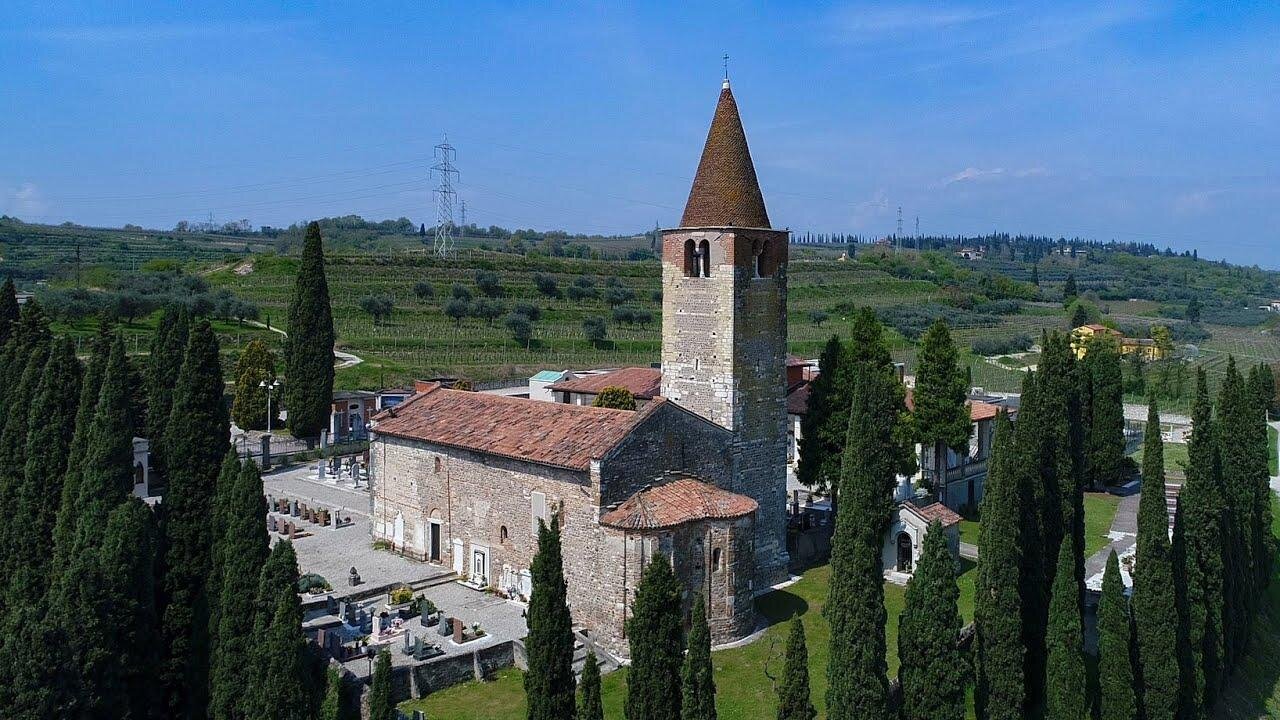
The Parish Church of Santa Giustina, surrounded by a cemetery, dates back to around the year one thousand; it certainly existed as early as 966, as evidenced by a parchment preserved in the State Archives of Verona. It was built on the site where, previously, there was a Lombard church and even earlier a pagan temple from the Roman era. The parish church is constructed with morainic stones arranged in a fishbone pattern and worked with mortar adorned with lozenges, to make them more harmonious in the sober Romanesque structure.
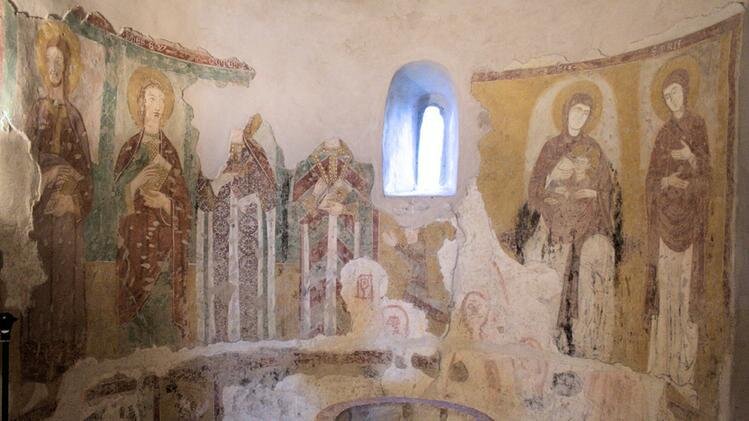
There is identifiable a Roman altar bricked out in projection at the left corner of the church facade, probably an ancient pagan altar; the Roman twisted column, which supports a bifora of the bell tower; a funerary monument dated to the 1st century finely carved, located in the presbytery serving as an ambo. Additionally, there are remnants of a Lombard ciborium from the 7th century and a Corinthian capital. The interior of the parish was once completely painted; the remaining frescoes are of priceless value, the oldest dating back to the year one thousand. This sacred place also has the uniqueness of having a single nave, but two apses that enclose one for the main altar, the other for the ancient baptismal font.