Over the centuries, poets, writers and lesser-known figures have left their mark on Sommacampagna, becoming part of its history, culture and collective memory. Discover three figures through three different perspectives: some were real people, while others emerged from literature or popular tradition. All, however, are deeply connected to these places.
Custoza is one of those places where history and literature meet in a remarkable way. Edmondo De Amicis actually fought here during the Battle of Custoza on 24 June 1866. Almost twenty years later, these same places would become the setting for one of the best-known stories in Cuore: The Tamburino Sardo.
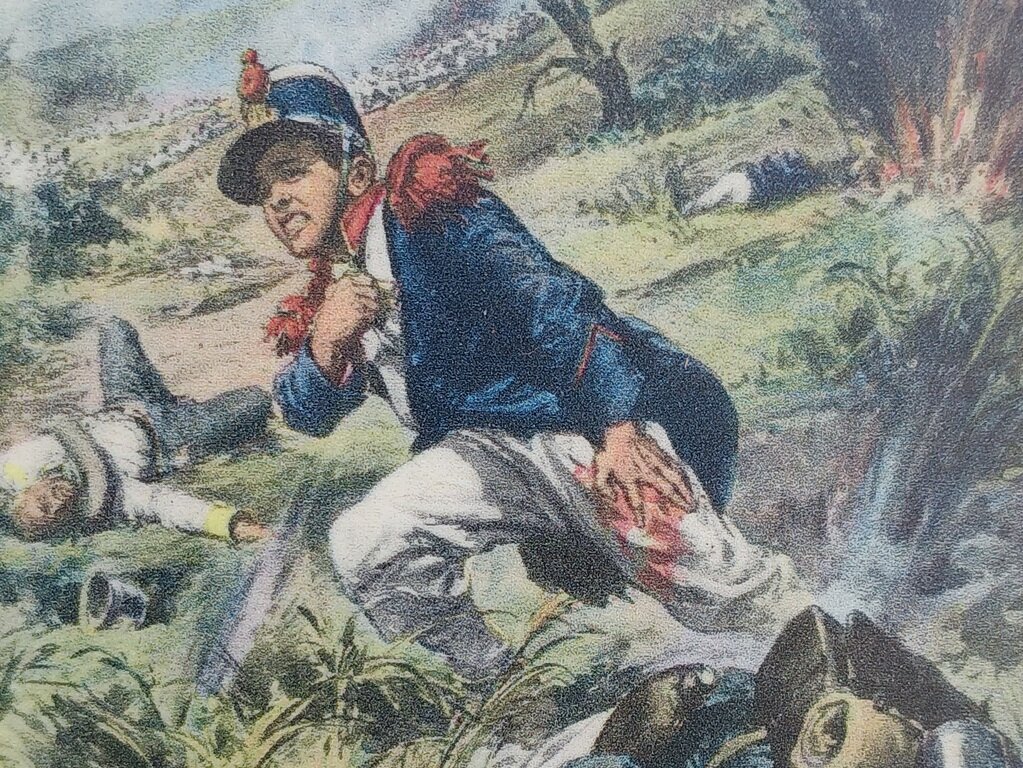
On 24 June 1866, the young Lieutenant Edmondo De Amicis took part in the Battle of Custoza as an officer in the Piedmont Brigade, part of the 8th Division commanded by General Efisio Cugia. With the 3rd Regiment, he initially remained in reserve on the slopes of Monte Torre, near Pozzomoretto. In the early afternoon, his unit was ordered to advance up the hill towards Monte Croce, where Italian troops were engaged in trying to halt the Austrian offensive towards Custoza. That day, De Amicis saw the building standing on the hill — at the time, the only one there — and became familiar with the places that, years later, he would transform into a literary setting. In Cuore, published by Treves in 1886, the story of the Sardinian Drummer is set on 24 July 1848, during the Battle of Staffalo. The young drummer, separated from his company inside a house surrounded by Austrian troops, is given the task of reaching Villafranca to ask for reinforcements. He climbs out of a window and crosses the countryside under enemy fire, managing to complete his mission despite suffering a severe wound.
The Tamburino Sardo is a fictional character, but the place where De Amicis set his story is real and closely connected to his own experience at Custoza. The house identified as the setting of the story is still known today as the House of the Sardinian Drummer.
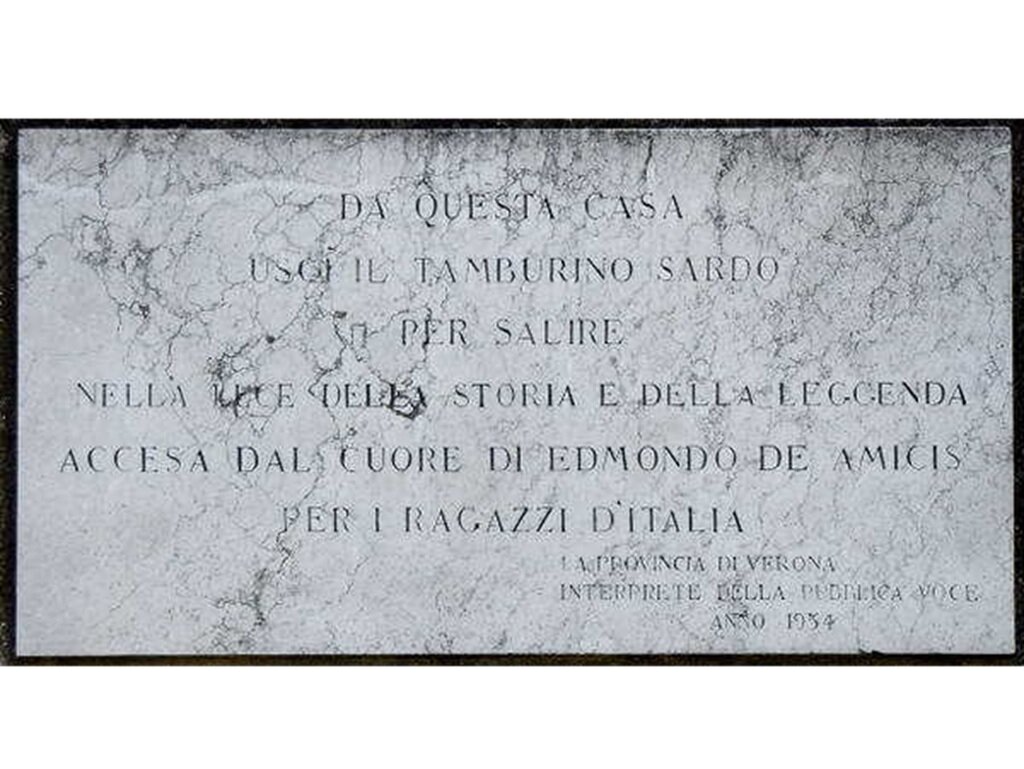
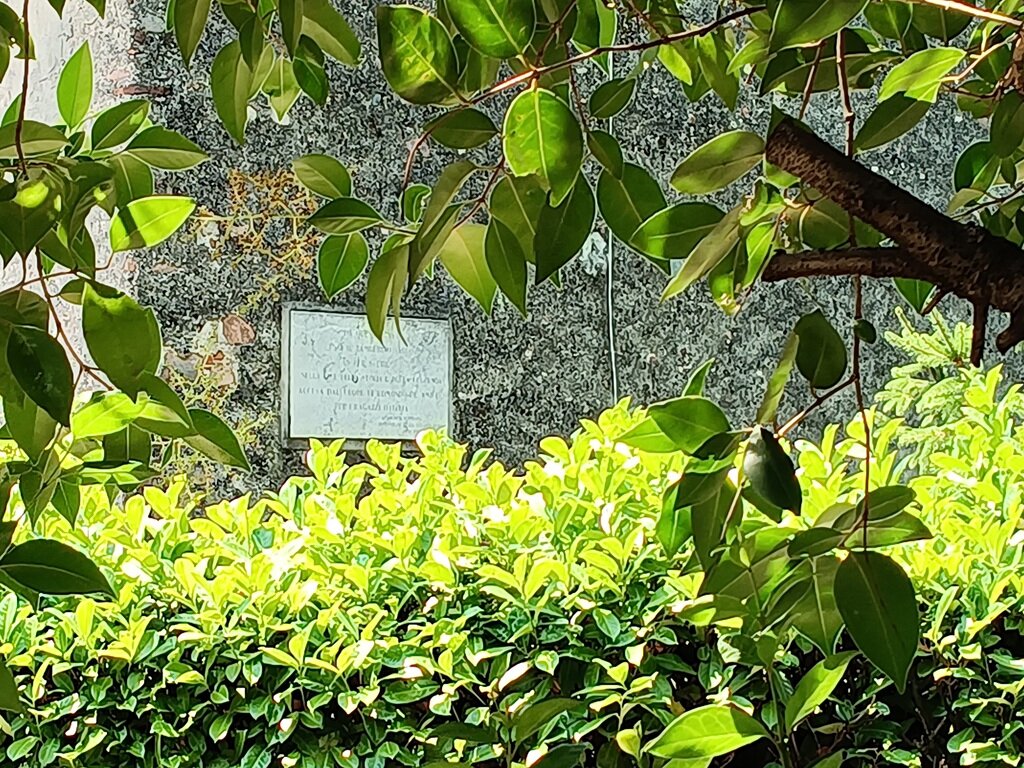
The story is set in 1848, but De Amicis actually fought at Custoza in 1866. These are therefore two different moments in the history of the Italian Risorgimento, brought together by the writer's memory and by the same places. In July 1954, a plaque was placed on the wall of the house identified as the setting of the story, commemorating the famous character from Cuore. This gave a tangible presence to a story born from literature and turned the house into one of the most intriguing traces of Custoza's past.
The places De Amicis passed through in 1866 are the same places where the story of the Tamburino Sardo is set in 1848.
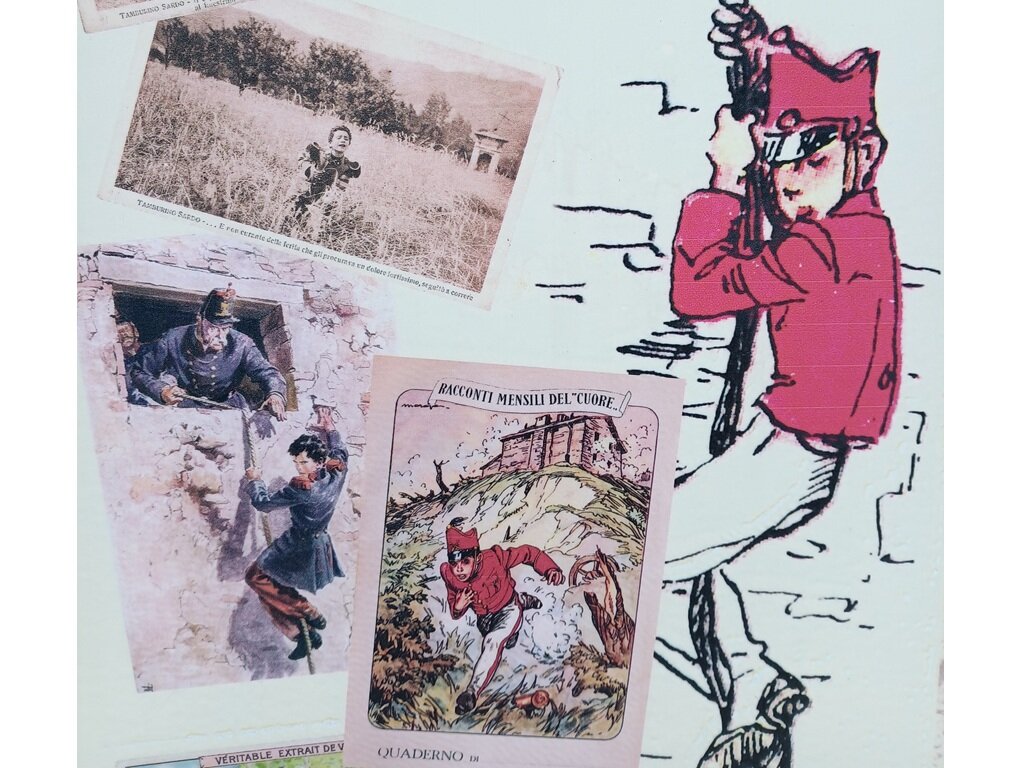
The story of the Tamburino Sardo became one of the most popular tales in Cuore and, in post-unification Italy, the young soldier came to be seen as a symbol of courage and sacrifice. Over time, the character moved beyond the pages of the book and into the collective imagination through illustrations, postcards, trading cards and film adaptations. Here in Custoza, his memory also lives on through a plaque on the house traditionally identified as the setting of the story.
In this way, a story born from Edmondo De Amicis's imagination continues to live alongside the real history of the area.
In the 14th century, when Verona was ruled by the powerful Scaliger family, a man from Sommacampagna rose to prominence at their court. His name was Gidino da Sommacampagna. Born between 1320 and 1330, Gidino came from a family in Sommacampagna and received an unusually broad education for his time. He studied Latin and French and devoted himself to literature, becoming familiar with the works of the great authors of both his own time and the past, including Virgil, Ovid and Dante.
He was a poet, scholar and musician, but also a man of the court. He served several members of the Della Scala family, holding positions as procurator, general administrator and adviser. His life also included difficult periods: after the death of Cangrande II, he fell out of favour and was imprisoned, before eventually returning to important positions in the service of the Scaliger family.
Between 1381 and 1384, Gidino composed his best-known work, the Trattato e arte deli rithimi volgari, a treatise devoted to the different forms of poetry written in the vernacular. The work is particularly interesting because it attempts to organise the different metrical forms used by poets of the time. It was written in the vernacular spoken at the Scaliger court, a language that preserves traces of ancient Veronese and bears witness to the development of Italian beyond Latin.
His writings contain references to classical culture, Ovid and Dante's poetic tradition, as well as allusions to the affairs of the Della Scala family.
Gidino was not just a poet. Historical sources also remember him as a musician and astrologer, as well as an administrator and adviser to the Scaligers. His story offers a glimpse into a lesser-known side of 14th-century Verona: that of a man born in a small town who succeeded in entering the cultural and political circles of the powerful Scaliger court. Today, his name still lives on in the place where he was born. Via Gidino da Sommacampagna, in the historic centre of the town, keeps his memory alive.
Custoza is home to a story that was not written by a single author, but passed down and reinterpreted by the community. It is the story of the Sego della Vecia, an old popular tradition that has been performed since the 19th century and has continued, generation after generation, to involve hundreds of local residents and thousands of spectators.
At the centre of the story is an old woman, Vecia Marcolina, who bursts into the life of a small farming community, bringing disorder and fear in her wake. Accused of stealing animals and starting fires, she is captured and sentenced. With the help of her husband, however, she manages to escape, gathers a group of men and faces the troops assembled by the local authorities in open battle. The Vecia is eventually defeated and brought back to face judgement. Her punishment is the most spectacular and symbolic of all: she will be sawn in two in the presence of the Devil. This is where the tradition gets its name: the “Sego della Vecia.”
Over time, the Sego has become much more than a performance. Its various stagings have involved entire generations of Custoza residents, transforming streets, houses and the surrounding landscape into a real-life stage. The last major documented performance took place on 23 March 1952. The director of the production, Giulio Piona, commissioned the Musitelli photographers of Villafranca to take a series of photographs that now make it possible to reconstruct that day and its protagonists. The images capture a remarkable performance, somewhere between community theatre and theatre rooted in the landscape. There was no traditional stage: the territory of Custoza itself became part of the performance.
The Sego della Vecia lived not only through its story, but also through its characters: Vecia Marcolina, the Pignati, the Lazzaroni, the Knights, the Artillerymen and the Constables. Along the route dedicated to the Sego, photographs and information panels still allow visitors to follow the different stages of the 1952 performance, from the procession to the battle, from the escape to the final scene. It is a story with neither a single author nor a single protagonist. It is the community of Custoza itself that has preserved, reshaped and passed it down through the generations.