Borghetto sul Mincio
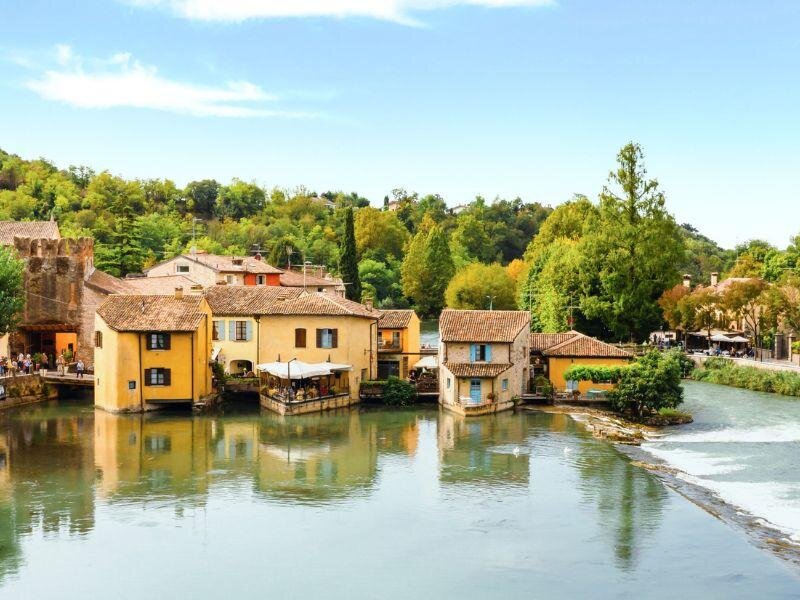
Borghetto is undoubtedly the most well-known hamlet of Valeggio sul Mincio for various reasons – historical, scenic, and monumental – that make this place so interesting that it boasts inclusion in the Club of The Most Beautiful Villages in Italy.
This small village, born in symbiosis with the Mincio River and characterized by ancient fortifications dating back to the medieval period, owes its charm to the harmonious relationship that history and nature have preserved almost intact over the centuries and today represents a “unicum” in urban planning to be visited at least once in a lifetime.
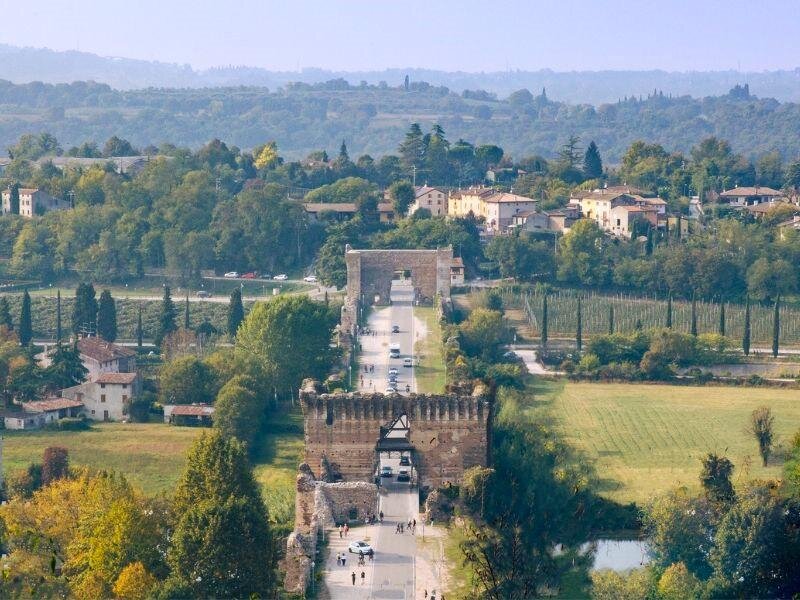
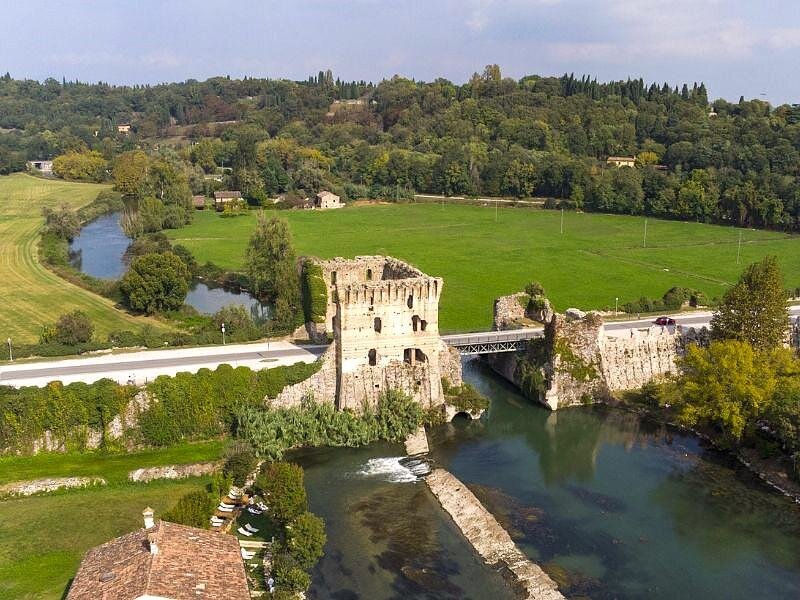
The oldest center of the hamlet still retains the characteristic appearance of a “medieval village,” emphasized by the presence of the bell tower, the wheels of the water mills (once used for grinding wheat and cereals), and the towers of the Visconteo Bridge, an extraordinary fortified dam built in 1393 at the behest of Gian Galeazzo Visconti, Duke of Milan, to ensure the impenetrability of the eastern borders of the duchy.
Extending 650m long and about 25m wide, with the roadway 9m above the river level, the “Long Bridge” (commonly referred to by locals) connects with the imposing Scaliger Castle through two tall crenellated walls and is integrated into a fortified complex called “Serraglio”, which at its peak, extended over approximately 16 km, reaching the plains of Nogarole Rocca.
The scenic presence of the Visconteo Bridge and the Scaliger Castle, together with the pleasant nature context and historically significant sites, undoubtedly makes Borghetto a popular tourist destination. Along the banks of the Mincio, pleasant days can be spent immersed in the calm and tranquility of its silent streets, visiting the small Church of San Marco Evangelista (18th century), built on the remains of a previous Romanesque parish from the 11th century, and observing the mysterious statue of St. John Nepomuk, which tradition holds protects from drowning those who fall into the river's waters.